Flower of U+2622
 Yuishi
■Title: 放射能の花
■Size: 135cm×90cm
■Material: アクリル絵具、スプレー、顔料インク / キャンバス
Acrylic paint, spray paint, pigment ink / canvas
■Year: 2018年
■ステートメント
2011年。東日本大震災により、福島第一原子力発電所で発生したメルトダウン等一連の放射性物質の放出を伴った原子力事故の影響で長年現地から回収されてきた大量の原発汚染土だが、今年6月環境省が、園芸作物などを植える農地の造成に再利用する方針を決めた。
ただのフレコンバッグ(土嚢)に放射性物質を入れて回収するという、元々出口(処理計画)のない愚かな行動のあげく、処理できなくなれば希釈して全国に捲くという正気の沙汰とは思えない政府の判断だった。
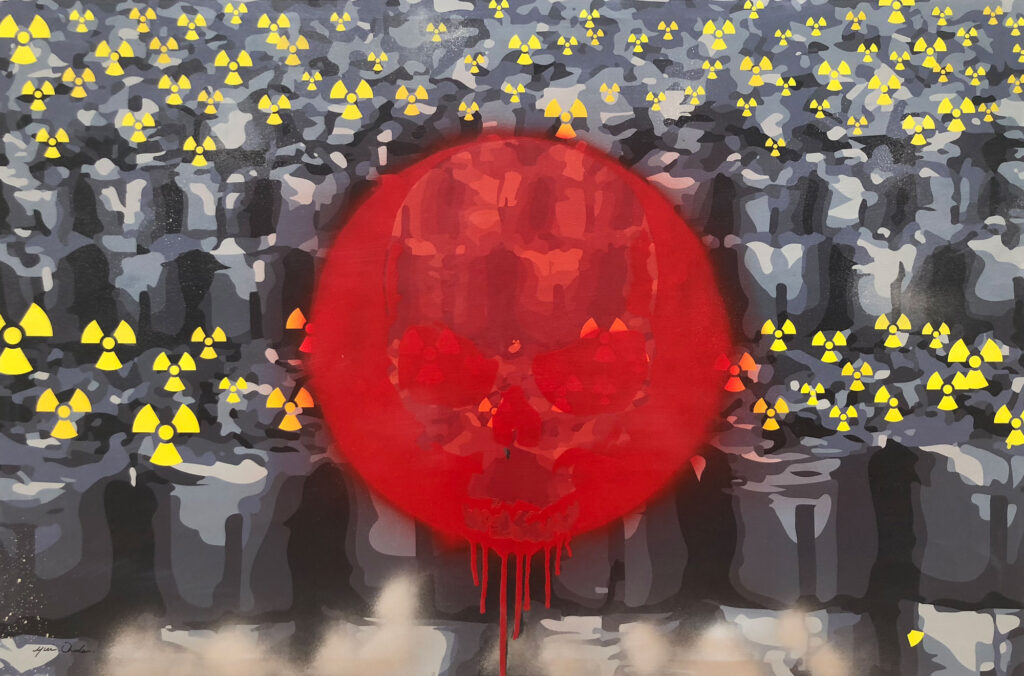
「U+2622」というのは、放射能を意味する世界共通コードだ。このままいけば、日本に放射能の花が咲くのではないかという目に見えない恐怖が、放射能マークを花に見えてくる。
タイトルの《Flower of U+2622》は《放射能の花》を意味し、ドクロを透かした丸からは、「涙」「血」「メルトダウン」を思わせる滴りも見せる。
絵全体が日本の国旗の比率になっていて、「不安」「怒り」「不信感」を抱く国民の心情を描く。
放射性物質の拡散は、人間も含めた生物にも細胞レベルで決して良いことはない。国が個体とすると我々個人は細胞であり、個体を良くしていくなら細胞の声を聞くべきだ。
■Statement
In 2011, the Great East Japan Earthquake caused a series of nuclear accidents at the Fukushima Daiichi Nuclear Power Plant, including a meltdown and the release of radioactive materials. For many years, a large amount of contaminated soil from the nuclear accident site had been collected. However, in June of this year, the Ministry of the Environment decided to reuse it for creating farmland for planting horticultural crops.
This was a foolish act, stemming from the lack of a proper disposal plan—simply collecting radioactive material in flexible container bags (sandbags)—and then, if disposal became impossible, diluting it and spreading it nationwide—a decision seemingly beyond the comprehension of the government.
"U+2622" is the globally recognized code for radioactivity. The invisible fear that Japan might become a "flower of radioactivity" makes the radioactivity symbol appear as a flower.
The title, "Flower of U+2622," means "Flower of Radioactivity," and the transparent skull circle reveals drippings reminiscent of "tears," "blood," and "meltdown."
The entire painting is proportioned to the Japanese flag, depicting the feelings of the people who are experiencing "anxiety," "anger," and "distrust."
The spread of radioactive materials is never good for living organisms, including humans, at the cellular level. If the nation is an entity, then we individuals are cells, and if we want to improve the entity, we should listen to the voices of our cells.
■Place
京都市美術館別館 | 京都
Kyoto City KYOCERA Museum of Art-Annex | Kyoto